
Savoie Wines

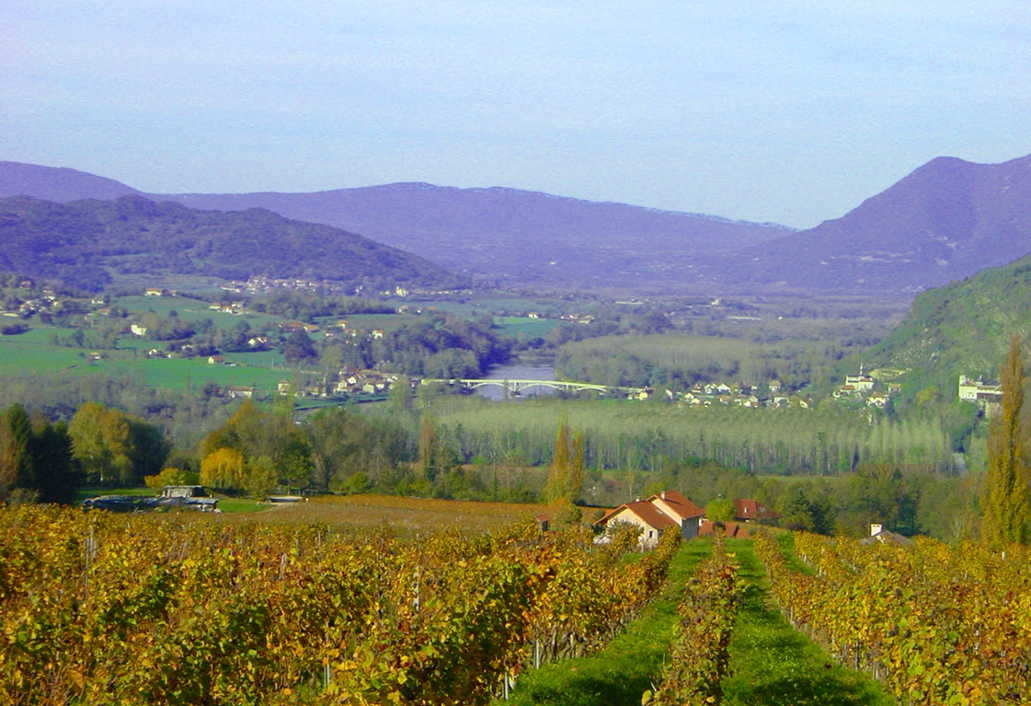
For most winter visitors, Savoie or more specifically ‘Les Pays de Savoie’: made up of the departments of ‘Savoie’ and ‘Haute Savoie’; is a region full of snow capped mountains with well-known ski resorts such as Val d’Isère and Courchevel. The tourists that visit during the summer enjoy the tranquillity of its lakes and forests. However, in-between the high mountains there are sunny valleys whose rocky slopes are ideal for vines and in fact the region has a long history of viticulture. In the 1930s French Geographer R. Blanchard described it as “a country of cattle and wine” and it is the wines that have long been sought after by those who discover them: from Monarchs to Bishops, authors to poets.
 

History

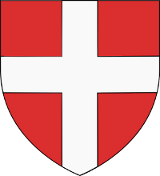
For much of its history Savoie was an independent Duchy but in 1860 a “deal” was brokered by politicians in France and the newly formed Italy; Savoie and Nice became part of France, and the Dukes of Savoie subsequently became the Kings of Italy. Even so, the Savoyards are proud of their own cultural identity as part of a country which was historically independent from France. They are also proud of their local products including wine, cheeses: such as Tomme, Reblochon and Beaufort; their cured ham: Jambon de Savoie; and the different varieties of fish from the abundant rivers and lakes. Even the supermarkets have large sections dedicated to local produce, where the shelves brim with items that proudly display the shield of Savoie. The Crest of Savoie

The Crest of Savoie

Geography

Savoie has a combined area of 10,416 km² or 6,472.2 sq mi, which is about half the size of Wales. It stands to the east of the River Rhône and borders both Switzerland and Italy. Its geographical location means that since Roman times, Savoie has been an important crossroads for people and goods: from Vienne in the South, Lyon in the West, Turin in the East, Dijon in the North-West and Geneva in the North-East.

The vineyards themselves can be split into three main areas: those in the North-East on the Arve River and by Lake Leman (Lake Geneva), those in the North-West near the Rhône (the first French vines to glimpse this great river) and around Lake Bourget, and finally those in the South, in the Combe de Savoie and the Cluse de Chambéry.

Map of Savoie’s Vineyards

Map of Vineyard Areas in Savoie

Climate

Without going into too much detail, the climate of Savoie is mainly continental, with a high average rainfall (1,200 mm a year) spread evenly throughout the year. Most vines are planted on steep slopes with good drainage. This means the large amount of rainfall has little effect on the health of the vines, but its regularity can encourage fungal diseases – as well as increase the risk of “coulure” (poor fruit set during flowering, which leads to small grapes that fall off before ripening).

As all of Savoie’s vines are currently planted at an altitude of between 200 and 500 metres, snow is not, as some assume a significant problem as it rarely settles for long below 500m. These same steep slopes also help protect the vines from strong winds and increase their exposure to the sun. Although Savoie has a low average annual temperature of 10°C, this increases during the growing-season (March to October) when the temperature averages 14.6°C. Part of this is thanks to Savoie’s long hot summer months which often last well into September and sometimes even October. This ‘Indian summer’ has led to certain producers exploring the possibilities of “late-harvest” wines, bottled under names such as “Délices d’Automne” (Autumn Delight) or “Passerillé de Novembre” (raisined grapes of November).

Grape Varieties

Savoie is one of France’s smallest viticultural regions (2,000 hectares under vines according to the latest Onivins statistics). However, Savoie grows twenty-three of France’s two-hundred and fifty grape varieties (or 9% of France’s varieties for 0.5% of its vineyards). Many of these have their origins in Savoie and are not found elsewhere in France, but several have travelled as far afield as Australia, California, and Argentina.

The Locals

The indigenous grapes to Savoie include: the raspberry, red cherry, violet and black pepper aromas of Mondeuse Noire; Altesse with its slight honeyed aromas of lime and hazelnuts; the green-apples and almond flavours of Jacquère and Mondeuse Blanche. Another variety is one that had all but disappeared, before recently undergoing a resurgence, is Persan which produces meaty, red berried wines.

Jacquère

This is the most planted variety in Savoie, and it makes a light, neutral white wine with relatively high acidity. It is mainly planted around the areas of Abymes and Apremont. The writer Henri Bordeaux (1870-1963) described it as a “wine that leaves your head clear, once it has taken your legs away.”

Synonyms: Cugnette, Martin, Cot Blanc, Plant des Abymes de Myans

Jacquere Grape
Altesse Grape Altesse

Altesse is Savoie’s finest white grape variety and was seen to deserve an Appellation Contrôlée of its own. There are many stories and legends of how the vine came over to Savoie, ranging from: being brought over by a Princess from Cyprus, to arriving via a knight from Hungary. However, as far as I’m aware, no research has found a match planted elsewhere.

The AC Roussette de Savoie has four crus, which produce the best examples of Altesse: Frangy, Monterminod, Monthoux, and Marestel. There is also the AC Roussette de Seyssel, which is also made exclusively from Altesse but from the vineyards of Seyssel on both sides of the Rhône.The vines have low yields and produce tightly packed, small-berried grapes. When the grapes ripen they go from green to a pinkish rusty colour.

Synonym: Roussette-Haute.

Mondeuse

This is Savoie’s second most planted red grape (although it is starting to catch up with Gamay), and the most planted of the traditional Savoie red varieties. It is also one of Savoie’s oldest and most distinctive grapes. It is a vigorous and productive vine and this is why it is often trained low. Its vines are planted all over Savoie, but the best Mondeuse crus are in the Combe de Savoie, consisting of St Jean de la Porte, Crûet, Arbin, and Montmélian.

The wines are deeply coloured with a peppery, violet nose and known for their longevity. The wines do well in oak, for example the Brova, which I reviewed earlier. Mondeuse has some Italian characteristics – slight bitterness and sour cherry notes; however DNA tests in Alto Adige have shown it is not, as some thought, identical to Fruilli’s Refosco.

Synonyms: Mollette, Morve, Savoieen, Savoiearde, Savoieant, Savoete, Savoieanche, Grand Chétuan, Maximieux, Persagne, Persaigne, Pessagne, Tournerin, Maldoux Marginien, Plant Noir

Mondeuse Grape
Mondeuse Blanche Grape Mondeuse Blanche

Mondeuse Blanche, perhaps surprisingly is not a white mutation of Mondeuse Noire, it also has a claim to fame being one of the parents of Syrah (the other being the Dureza from Ardèche). It is mainly planted around Montmélian and St Jean de la Porte. There is very little of it still planted, but it is usually found as a single varietal wine and produces a dry and relatively soft wine.

Synonyms: Dongine, Donjin, Jongin and Savouette, which Viala and Vermorel in their book Ampelographie suggest that the last name “indicates that it has always had its origin in Savoie”

Persan

Persan appears to have originated from the vineyards of Princens, in St-Jean de Maurienne. This was one of Savoie’s great varieties, but it nearly disappeared for several reasons: its sensitivity to oidium and mildew, as well as its early budding which exposes it to spring frosts. It has had many fans over time and even had a poem dedicated to it – Nicolas Martin’s Adioz Nobla Cita. According to Doctor Jules Guyot “Persan made at Princens in Maurienne is an exceptional wine, of a rare quality. Rich on the nose it unites a warm flavour and causes a physiological action like those of the best Burgundies.”

Whilst another doctor, Dr Paul Ramain (in his book Les Grands Vins de France), explains that “Princens is in my opinion the greatest red wines of Savoie. It is made from […] Persan de Maurienne […] and [is an] exceptional wine but unfortunately very difficult to get hold of, which keeps our [France's] gourmets ignorant of it. With a rich bouquet, stimulating, powerful (12°) it keeps for a long time, and is very smooth, and acts like a ‘peacock’s tail in the throat’ with a strong and persistent taste of raspberries (Clos de Rocheray) or violets (Clos de Petites-Ripes et de Bonne-Nouvelle). It spends 5 years in barrel in a very cold cellar and isn’t drunk before it is 15 or 20 years old. This really is a wine that resembles no other fine wine in France and is fit for a princely table and the palate of the best informed gastronomes!” There are only a few parcels of Persan left in the Combe de Savoie, but it is thankfully being replanted by a handful of winemakers, and producing some very promising wines.

Synonyms: Becuetta, Becuette, Becu, Princens (Maurienne).

Gringet

Gringet produces light, floral wines with hints of white peach. Up until very recently it was thought to be the same grape as the Traminer of Northern Italy, and the Savagnin Blanc of the Jura. It has however since been proven (thanks to DNA testing by José Vouillamoz from the University of Neuchâtel), to be a completely distinct variety found only in the Haute-Savoie. Gringet is another local grape that has seen a decline of planting and there are currently only around 20 hectares left. The majority of these being grown on the hills above the Arve Valley and used to make the still and sparkling wines of the Ayze AOC. 

The Visitors

Savoie stands at the crossroads of the Alps and has several “foreign” varieties of grape which have made it their home. These varieties range from the obscure to the illustrious.

Malvoisie

Malvoisie is officially called ‘Velteliner Rouge Precoce’ and thought to be the same as Austria’s Frühroter Veltliner. Confusingly, some producers also produce Pinot Gris and bottle it under the name Malvoisie; which is a traditional synonym for Pinot Gris in the Loire, Savoie and Switzerland.

Chasselas

Chasselas is France’s most common table grape and also found in Alsace, the Loire valley, as well as Savoie. In Savoie the light, lemon, floral and nutty wines produced by the Chasselas grape grow near the banks of Lake Leman, situated in the Crus of Marin and Ripaille. The vineyards look across the lake to their Swiss counterparts (it is known as Fendant in Switzerland). On the Swiss side of the lake the grapes grow on the steep slopes which plunge into the Lake.

Bergeron (Roussanne)

In the appellation of Chignin, a delicious, rich and honeyed wine with ripe pear and fig aromas is produced from the Bergeron grape; the local name for the Rhône’s Roussanne. Unlike the Rhone where Roussanne is usally blended with Marsanne, here it is made as a varietal wine and is aromatic and refined with a roundness and weight that can be unusual in Savoie wines.

The Vines of Chignin

The Vineyards of Chignin (Granier in the background)

Gamay

Chautagne has a reputation for producing fine, light reds, with aromas of strawberry and redcurrant from Gamay – imported from nearby Beaujolais after phylloxera (a vine-louse brought across from America in the 19th Century which nearly destroyed most of Europe’s vineyards) completely exterminated Chautagne’s vines. This offspring of Pinot Noir and Gouais Blanc produces some easy drinking, light, fruity reds but it doesn’t have the depths or complexity that can be found in some of the Beaujolais crus.

Pinot Noir

Pinot Noir was also brought over from Burgundy post-phylloxera and it is now planted in small quantities all over Savoie. Here Pinot Noir produces wines with red cherries, raspberries, slight spice and leather characteristics.

Chardonnay

This is probably the world’s best known variety and it has been grown in Savoie for centuries, well before its Burgundian brothers (Gamay and Pinot Noir) came to join it. There are some good examples of Chardonnay in Savoie, but as with Pinot Noir there are better examples made elsewhere in France and the rest of the world. I personally think that growers would be better off focusing on Savoie’s autochthon varieties.

The Appellation

The Appellation d’Origine Controlé system is often criticised for being difficult for consumers to understand, and unfortunately I’m not sure that the EU’s new PDO system is any simpler. The system in place for Savoie is one of the better examples of an over-complicated appellation.

It is based around the usual ‘pyramid of quality’ starting with the basic ‘Vin de Savoie’, which since 2011 can be simply called ‘Savoie’. This term can be used for any wine from Savoie’s delimited vineyard areas, as long as it is made with any of the permitted varieties.

On the same level, there is also “Roussette de Savoie” which again can come from any Savoie vineyard but must be made from the Altesse (Roussette) variety.

A step up from the entry level are the higher quality Cru: seventeen for ‘Vin de Savoie’- including one sparkling, and four for ‘Roussette de Savoie’.

These Crus are historically important wine-villages/towns. Seyssel complicates things further as it has its own appellation with ‘Vin de Savoie’. This is not due to the wines being seen as higher quality than the other crus, but simply because the town’s wines received Appellation protection before the creation of the Vin de Savoie. Seyssel became protected in 1942, whilst Vin de Savoie was not created until 1973.

The Appellation of Savoie

The Triangle of the Appellation of Savoie

Although the AOC system in place for Savoie can be overwhelming at first, onve you have got to grips with it you can simply look at a bottle of Roussette de Savoie Cru Monthoux and know exactly what the grape variety is – Altesse; that the tiny parcel of land is – on the slopes of the Mont du Chat; and that the grapes have a beautiful view into the valley onto the River Rhône.

Marestel

The View from the vines of Marestel (The Rhône River in the background)

Where to buy

These wines are rarely exported, with around 90% of Savoie wine being consumed within the Rhône-Alps region (I imagine most of that is within the borders of Savoie itself). It is possible to find some Savoie wines abroad and if you are keen to try some, there are a few importers in the UK that stock Savoie wines: Yapp Brothers, Les Caves de Pyrène, Vine Trail and Dynamic Vines.

Of course the best way to taste and truly enjoy these great wines is go over and visit the region for yourself.

For more information

If you would like more information then feel free to drop me an email via the contact page. Or have a look at a guide on the wines of Savoie and the region written by Wink Lorch (wine writer and educator). It is available here Wine Travel Guides.

Share

Comments are closed.